Roy’s Toys: Preserving a Perth County childhood
By OBP member Mel Luymes, Editor of The Rural Voice
(This story, first published in The Rural Voice in July of 22025 , is presented here with additional photos thanks for the generousity of Mel Luymes and Roy Berfelz)
PART 1 of 2
From the outside, Roy and Terry’s house is much the same as others in a subdivision in New Hamburg. But inside, you are transported back in time with Victorian era chairs, ornate rugs, gorgeous wood finishes, and chandeliers. The former owners of what was Cranberry Bed & Breakfast, an old home built in 1872 on Waterloo Street, moved here in 2018 and were able to make most of the furniture fit into the new house.
And the well-finished basement looks like a museum, full of antique farm collectibles.
“I’m just a big kid,” says Roy, with a grin. A sign at the door reads Roy’s Toys.
Roy Berfelz is generous with his time and takes me through the shelves of his collection of old toy tractors, many well over 100 years old. Over the years, he has collected items that would have been used around the house and farm at the turn of the (last) century: antique tractors and wagons, milk cans, a dough box, cast iron maple syrup molds, an apple butter pan, wool carders, and so much more. In the past, he brought them to fairs and shows but most of the family’s small farm tools and artifacts have been given to Roy’s nephew, and the equipment has gone to auction or to museums.
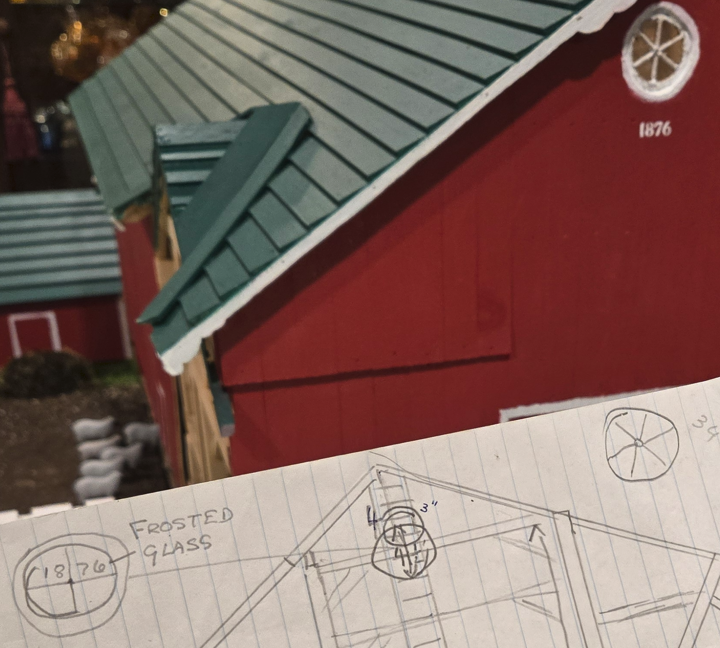
The highlight of Roy’s basement museum is a model replica of his family’s barn in the middle of the room. Intricately painted in the original red, with a green roof and white trim, it reads “F. W. Yungblut & Sons” in white letters on the side, just like it used to. He worked to recreate it just how it would have been in the 1920s, with his grandfather’s Ford Model T to boot.
“It’s exactly the way as when grandpa had it,” explains Roy, who spent plenty of time playing and working in this barn as he grew up in the 1940s and 1950s. He points to the flat roof over the doorway where he remembers playing as a seven-year-old; his younger brother pushed a hose winder over the edge just as his grandfather Fred was coming out the door.
“I had never seen my grandfather mad before,” says Roy.
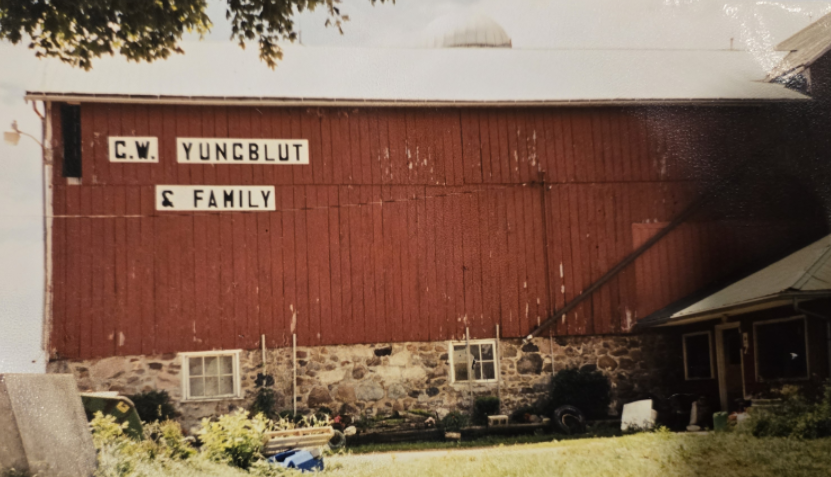
This model barn project began for Roy in 2003, the year he retired. He went to the old farm in Wallace Township (now North Perth) with his uncle Gordon and measured out the buildings. The main barn was 85’long by 48’ wide and 30’ tall, and built around 1876, or so it says, etched into a six-pane frosted round window above the barn doors. At that time, however, the barn read “G.W. Yungblut & Family.”
The horse barn attached to it was 60’ x 30 and 26’ high, and built in 1901, a year after John and Maria Yungblut moved to the farm. The barn is a high end-beam barn with squared rafters and two wooden cupola ventilators on the main barn roof to channel fresh air to the hay mow, and they were topped with rooster weather vanes. There was also a poured concrete silo with an eight-sided wooden roof and a separate pig barn making the barn into a U-shape.
In the 1920s, this would have been one of the largest barns in the area. As well, the barn would have then been powered by a hit-and-miss engine driving a line shaft which could run the grain grinder, cream separator, root pulper and some wood working equipment. He found a small replica of the engine for the barn scene. Roy fires it up; it rhythmically whirs and pops. And Roy’s blueprints included all of these details, to about a twentieth of the size.
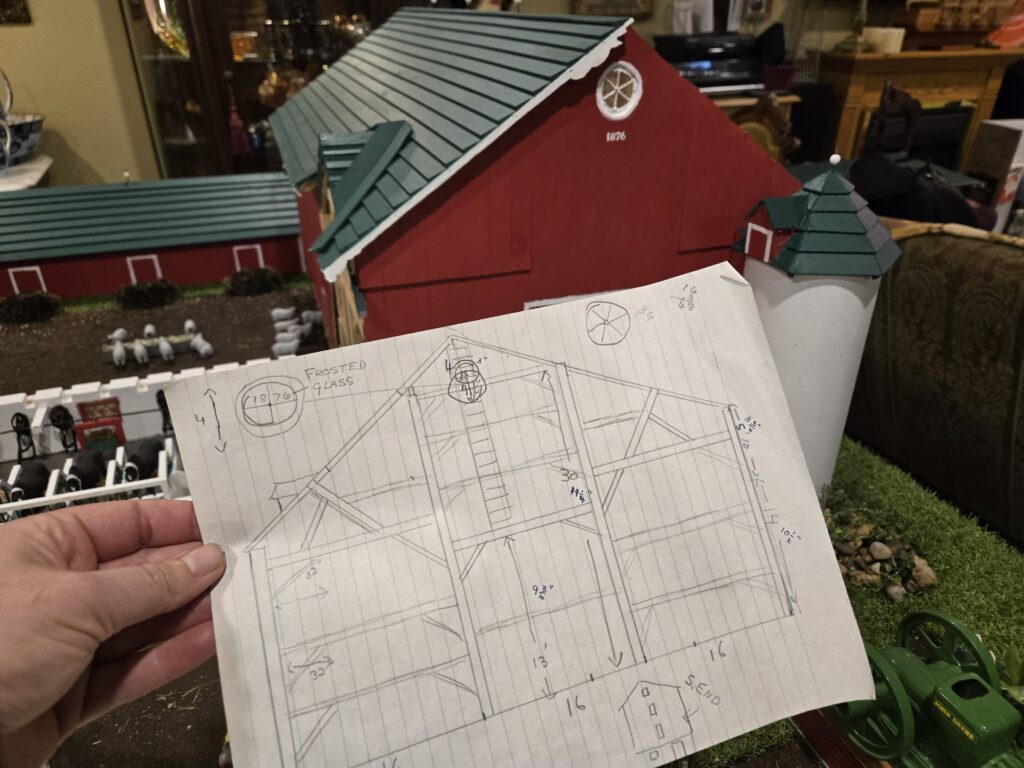
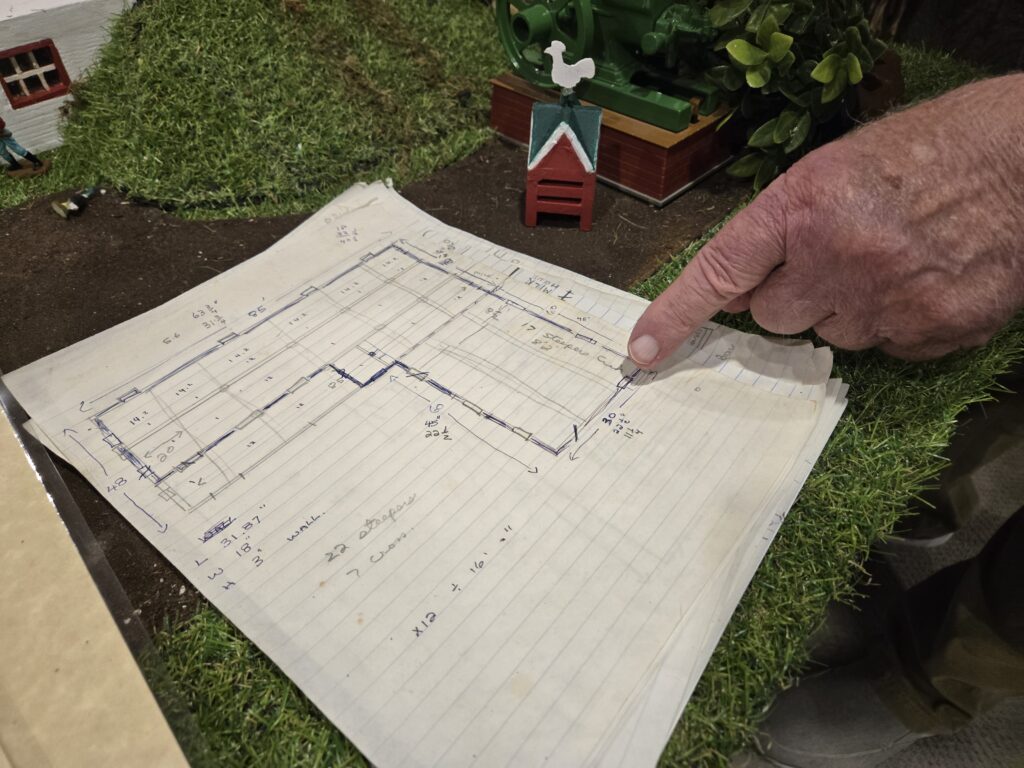
He started the project and then realized it was going to take a lot of tools that he didn’t have. When they moved in 2018, Roy thought he’d either have to finish it or throw it away. So, he decided to finish it. He asked around to some local wood shops and found a teenage boy near Elmira that was willing to do the project. It took him about seven months, off and on and using his father’s tools, to complete the project. Roy came by the shop a few times to see how he was doing, but the boy did incredible work. He had not seen the original barn, but made the entire model based on Roy’s drawings.
When he brought the wood model to the basement in November 2023, Roy got to work painting it and adding all the details that make the barn so special. It took the whole winter to complete, and he only got one spot of red paint on the white carpet, he says.
To be continued ….
To all OBP blog readers: If you have not already done so, please support not-for-profit, volunteer-run, Ontario Barn Preservation by becoming a member! Also, if you are in the business of repairing, reconstructing, engineering, designing, etc. old barns, please consider advertising your amazing skills on our Barn Specia-List. If you own an old barn that you would like to offer to someone else, or you are hoping to obtain one for your own project, make use of our Barn Exchange page. If you own an old barn and would like to save it in the virtual world for future old barn lovers, historians and researchers, check out our Your Old Barn Study page. And please send us your own barn story, photos and/or art for submission as a OBP blog posting for the enjoyment and education of all barn lovers! info@ontariobarnpreservation.com
Share this:

Discover more from Ontario Barn Preservation
Subscribe to get the latest posts sent to your email.